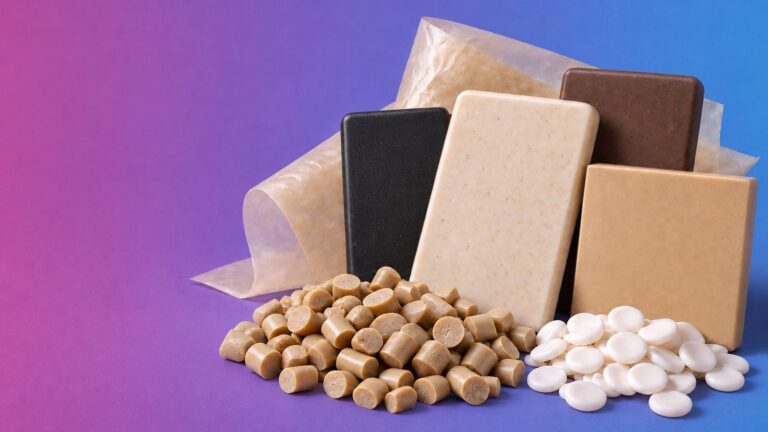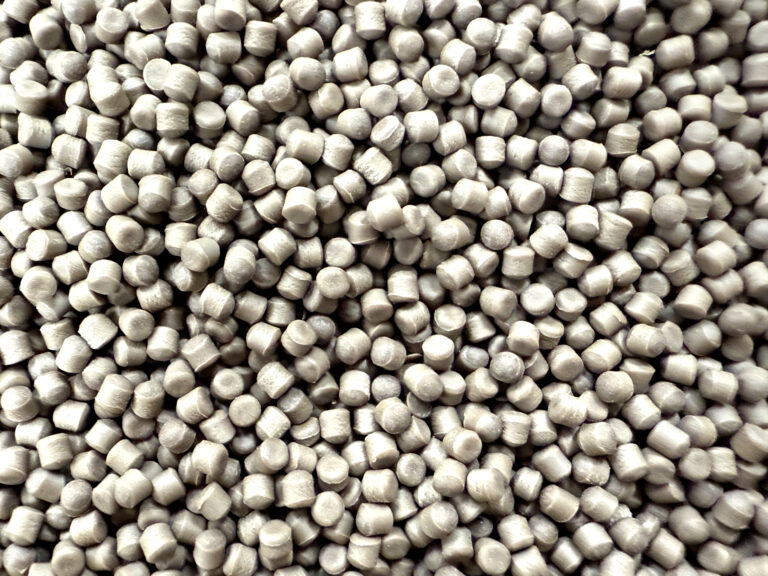
GreenHub
What Is a Carbon-Negative Material? The Science of True Decarbonization
Sustainability vocabulary has gotten noisy. As industries race toward “Net Zero,” terms like eco-friendly, carbon-negative, low-carbon, and bio-based get thrown around almost interchangeably. For engineers, product designers, and sustainability directors actually specifying materials, that’s a problem, precision is the whole point.
The most powerful term in that lexicon is carbon-negative. But what does it actually mean in materials science? How is it different from a bioplastic, a biocomposite, or a bio-based material? And is it a measurable physical reality, or just marketing?
This guide gives you the technical definition, the science behind biogenic carbon sequestration, and the impact hierarchy that separates low-carbon, carbon-neutral, and carbon-negative, plus what it actually takes to prove each one.
The Core Definition
A carbon-negative material is a substance that removes and sequesters more carbon dioxide (CO₂) from the atmosphere than is emitted during its entire lifecycle, from raw material sourcing through to manufacturing (Cradle-to-Gate).
Unlike a standard material that adds carbon to the atmosphere, or a neutral material that merely balances its emissions, a carbon-negative material acts as a carbon sink. It creates a net reduction of greenhouse gases in the atmosphere.
The Science: How Does a Material Remove Carbon?
Carbon-negative materials rely on biogenic carbon sequestration, carbon captured by biomass as it grows. Using fossil energy during manufacturing erodes that advantage, but doesn’t automatically rule out a carbon-negative result, provided the carbon stored stays greater than the emissions generated across the full lifecycle.

1. The Capture (Photosynthesis) Strength
Sugarcane, wood, rice straw, algae, whatever the source, plants absorb atmospheric CO₂ as they grow. Photosynthesis splits carbon (C) from oxygen (O₂): the oxygen goes back into the air, and the carbon gets locked into the plant’s structure, roots, stems, leaves. That biogenic carbon becomes the raw material for bio-based biocomposites and bioplastics.
2. The Transformation (Upcycling)
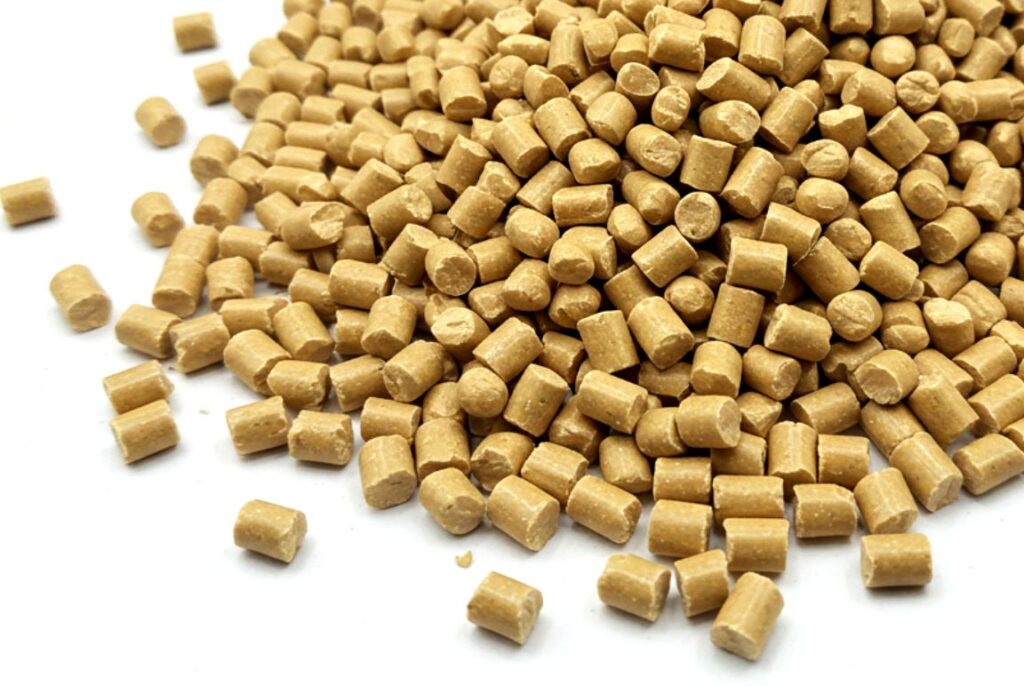
This is where Biomera’s technology comes in. We take this carbon-rich biomass waste (that would otherwise decompose and release their carbon back into the air) and transform it. We then process this upcycled biomass into engineered biocomposite compounds and masterbatches, creating stable material formulations that help manufacturers reduce fossil content, lower product carbon footprints, and carry biogenic carbon into long-lasting applications.

3. The Lock-In (Sequestration)
Once that material is molded into a finished product, an automotive part, cosmetic packaging, a consumer good, the biogenic carbon stays stored for the product’s working life. This temporary carbon storage is one of the key mechanisms that can help lower a material’s overall carbon footprint. Depending on the formulation, the manufacturing process, and the results of a Life Cycle Assessment (LCA), that storage can contribute to a very low carbon footprint, and in some cases carbon negative footprint.
Bioplastics, Biocomposites, Bio-Based Materials: What’s the Difference ?
These three terms describe different things, composition, origin, and environmental performance, and they’re often used interchangeably. They shouldn’t be. None of them, on its own, tells you a material’s carbon impact.
Bioplastic
A bioplastic is a polymer that’s bio-based (made from renewable resources), biodegradable, compostable, or some combination of the three. A bioplastic like PLA or PHA isn’t automatically carbon-negative, its footprint depends on how the feedstock was grown, how much energy went into manufacturing, transport, and what happens at end of life.
Bottom line: bioplastic describes a polymer’s origin and/or end-of-life behavior, not its overall climate impact.
Biocomposite
A biocomposite combines a polymer matrix (bio-based or not) with plant-based fillers or fibers, flax, hemp, rice husks, wood fiber, bagasse. Incorporating more renewable or residual biomass can help reduce fossil dependency and lower a product’s overall carbon footprint. In some cases, and subject to a full lifecycle assessment, high-biomass formulations can also contribute to temporary biogenic carbon storage for the life of the product.
Bottom line: biocomposite describes a material’s composition. Its carbon impact depends on formulation, manufacturing, and lifecycle.
Bio-Based Material
A bio-based material is one where some or all of the carbon comes from renewable biological resources. Bio-based content describes carbon origin, it doesn’t, by itself, say anything about climate impact. A 100% bio-based material can still carry a high carbon footprint if its production, processing, or logistics are emissions-heavy.
Bottom line: bio-based describes where the carbon in a material comes from, not its final carbon footprint.
Why the Distinctions Matter
Origin (bio-based), composition (bioplastic or biocomposite), and climate impact (carbon footprint) are three different characteristics. They’re not directly comparable, and none of them alone determines a material’s final carbon balance.
Only a Life Cycle Assessment, with a clearly defined scope, can establish a material’s actual carbon footprint.
In practice, high-biomass materials tend to offer greater carbon-reduction potential. But neither bio-based content, nor biodegradability, nor the presence of plant fibers guarantees a carbon-negative result on their own. That has to be demonstrated case by case, through an appropriate LCA.
The Biomera Approach
Biomera develops advanced biomass-based materials, biocomposites and bio-based masterbatches, engineered to help manufacturers reduce their dependence on fossil resources and lower their products’ carbon footprint. By combining biomass valorization, reduced fossil content, technical performance, and regulatory compliance, our solutions support decarbonization strategies across packaging, automotive, consumer goods, and industrial applications.
Comparison: Low-Carbon vs. Carbon-Neutral vs. Carbon-Negative
Understanding this impact hierarchy matters for your sustainability strategy. Low-carbon is a good step. Carbon-negative is the destination.
“Net-Zero” is usually a corporate target reached by purchasing carbon offsets. “Carbon-negative” is a physical material property, achieved through physics and chemistry, not accounting.
| Term | The Math | The Impact | Example |
|---|---|---|---|
|
High Carbon |
Emissions >> 0 |
Harmful. Adds massive CO₂ |
Virgin fossil-based plastics (PP, PET, PS) |
|
Low Carbon |
Emissions > 0 (Reduced) |
Better. Lower impact than conventional alternatives. |
Recycled plastics, some bioplastics, bio-based materials, biocomposites |
|
Carbon Neutral |
Emissions ≈ recognized removals/offsets |
Status Quo. No net increase in emissions, depending on the methodology used. |
Assessed case by case, based on LCA and carbon strategy |
|
Carbon Negative |
Biogenic carbon stored > lifecycle emissions |
Restorative. Potential net biogenic carbon storage, when stored carbon exceeds emissions generated. |
Certain high-biomass formulations (subject to LCA confirmation) |
How is Carbon Negativity Measured? LCA (ISO 14040/14044)
You cannot simply claim a material is carbon-negative; you must prove it. The standard scientific method for this is the Life Cycle Assessment (LCA).
An LCA calculates the “Global Warming Potential” (GWP) of a material by summing up all emissions and subtractions across its life stages:
Sourcing: Emissions from farming or collecting biomass (minus the carbon stored in the plant).
Processing: Emissions from converting biomass into a usable material.
Transport: Emissions from shipping raw materials to the factory.
The Equation:
[Carbon Stored in Biomass] – [Total Emissions from Sourcing & Production] = Net Carbon Footprint
If the amount of stored carbon is greater than the emissions produced to make it, the result is a negative number (e.g., -1.5 kg CO₂e). This is the gold standard of proof.
Why This Matters for Manufacturers: Scope 3 Impact
Switching to a carbon-negative material is the single most effective lever for reducing Scope 3 Emissions. Instead of trying to optimize a fossil-fuel supply chain for marginal gains (0.1% reduction), replacing the material itself can flip the equation entirely, turning your product from a carbon source into a carbon sink.
For brands with aggressive plastic reduction targets, replacing fossil-based polymers with high-biomass, carbon-negative materials offers a double benefit: it reduces plastic content and eliminates carbon emissions simultaneously.
To see how these materials are applied in real-world manufacturing, from injection molding to extrusion, explore our implementation guide.
Compostable Materials and Carbon-Negative: Two Separate Properties
A carbon-negative material isn’t automatically compostable, and vice versa. These are two independent properties:
- Carbon-negative → measures lifecycle climate impact (sourcing + production). Assessed via LCA (ISO 14040/14044).
- Compostable → describes end-of-life behavior: the ability to break down under industrial composting conditions (EN 13432) or home composting conditions into CO₂, water, and biomass, with no toxic residue.
Common Misconceptions
Is every bio-based material carbon-negative?
No. This is a common myth. If a bio-based material requires massive amounts of energy, water, and fertilizers to grow and process, those emissions can outweigh the carbon stored in the plant. A material is only carbon-negative if it is produced efficiently, preferably using Upcycled waste biomass rather than virgin food crops.
What’s the difference between a bioplastic and a carbon-negative material?
A bioplastic is a bio-based and/or biodegradable polymer. A carbon-negative material is one whose Cradle-to-Gate LCA shows that sequestered biogenic carbon exceeds production emissions. The two categories can overlap, they’re not synonyms.
What is a bio-based biocomposite?
A biocomposite combining a polymer matrix with biologically derived fillers or fibers, flax, hemp, rice husks, bagasse. When the matrix is bio-based and biomass content is high, a biocomposite can reach carbon-negative status, as measured by LCA.
Is carbon neutrality enough to comply with EU 2024/825?
Not if it relies solely on offsets, carbon credits external to the value chain. The EU’s Empowering Consumers for the Green Transition Directive (2024/825) explicitly bans carbon-neutrality claims based exclusively on offsetting. Neutrality achieved through measured physical reduction, backed by an LCA, remains permitted.
How do you verify a material is genuinely carbon-negative?
Ask for the full LCA report, compliant with ISO 14040/14044, specifying the system boundary (Cradle-to-Gate or Cradle-to-Grave), the Global Warming Potential (GWP) value in kg CO₂e/kg, and the name of the third-party verification body. Without those elements, the claim isn’t substantiated.
What industrial applications use carbon-negative materials?
Automotive (technical parts, interior trim), cosmetic and food packaging, consumer goods, consumer electronics, construction, and 3D printing. Carbon-negative biocomposites are compatible with standard processes, injection molding, extrusion, with no line modifications required.
Does “carbon-negative” mean it is biodegradable?
Not necessarily. These are two different properties.
-
Carbon-Negative refers to the climate impact (CO₂).
-
Biodegradable refers to the end-of-life (decomposition).
A material can be carbon-negative and durable (designed to last for decades in the Technical Cycle).