GreenHub
Compostable Biocomposites: A Strategic Guide to High-Performance Circular Materials
As the global manufacturing sector moves toward regenerative innovation, compostable biocomposites have emerged as the cornerstone for achieving true decarbonization. Biomera leads this shift by transforming upcycled biomass into advanced industrial solutions that bridge the gap between high-performance engineering and a 100% circular economy.
The Science of True Decarbonization in Materials
Meeting modern decarbonization goals requires a move beyond simple carbon reduction. Biomera’s biocomposites leverage biomass waste to sequester carbon, providing a “carbon-negative” footprint.
These materials are engineered to replace traditional petroleum-based polymers with upcycled biomass feedstocks, turning industrial waste into a high-value resource for the 2026 carbon-negative material market.
Navigating Regulation: The SUPD-Compliant Breakthrough
A primary challenge for modern product designers is complying with the EU Single-Use Plastics Directive (SUPD). Brands are under immense pressure to eliminate microplastics and ensure end-of-life safety.
Biomera is developing a breakthrough material specifically designed to navigate this complex regulatory landscape. Our upcoming V3 platform offers a unique set of advantages for SUPD compliance:
Legally Non-Plastic: We formulate using non-chemically modified natural polymers, aiming to fall outside the strict classification of “plastic” under current SUPD frameworks.
Technically Versatile: These materials are capable of being injected and extruded just like traditional polymers. This ensures no loss in manufacturing efficiency—a critical factor for industrial scalability.
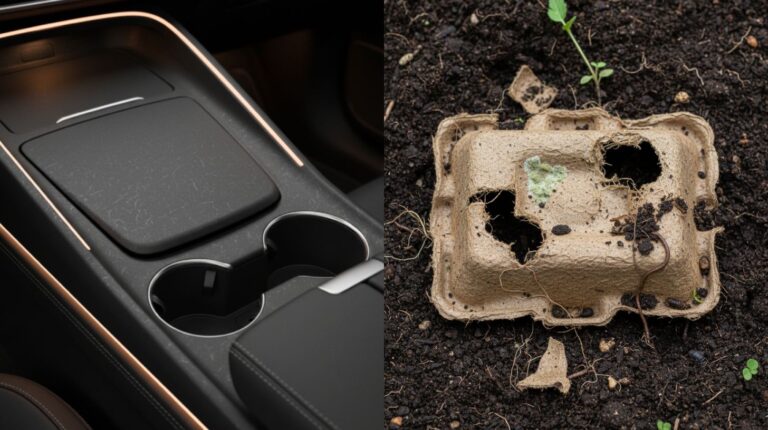
Compostable by Design: Engineered for both home and industrial compostability, ensuring a clean, nutrient-rich end-of-life cycle that leaves zero microplastics behind.
Scaling Sustainability: Automotive, Packaging, and Beauty
Our biocomposites are not just theoretical lab experiments; they are crossing into active production across critical industrial sectors. This versatility is what defines regenerative innovation.

• Consumer Goods & Beauty: We deliver high-performance, durable, and compostable alternatives to single-use plastics. From coffee capsules to reusable cutlery, these materials withstand heat and stress while ensuring compliance with circular economy standards.
• Packaging & Foodservice: The cosmetics industry is urgently seeking a “Beyond the Bottle” solution. Our materials provide a vital replacement for microplastic-generating packaging, ensuring product safety, luxury aesthetics, and environmental health.
• Automotive: We are integrating bio-based composites into vehicle components and logistics crates. The goal is twofold: to reduce weight (lightweighting) for better fuel efficiency and to meet aggressive supply chain (Scope 3) decarbonization targets.
Choosing Your Path: Masterbatch vs. Biocomposite
For a manufacturer, the transition to sustainability is a journey. The right solution depends on your current infrastructure and long-term circularity goals.
Low-Carbon Masterbatch: This pathway is best for manufacturers looking to decarbonize existing polymer streams (such as Polypropylene or Polyethylene). It functions as a “drop-in” carbon reduction strategy that requires no changes to your base material supply or machinery. You simply blend the masterbatch with your standard plastic to lower the final product’s carbon footprint.
Biocomposite Compounds: This pathway is the ideal choice for brands moving beyond conventional plastics entirely. These ready-to-use compounds offer the highest sustainability credentials, including industrial compostability and optional home compostability. It is the preferred route for creating a truly circular product from scratch.
Key Questions & Expert Insights
What are compostable biocomposites?
Compostable biocomposites are advanced materials combining natural fibers or upcycled biomass with compostable polymers. They are designed to provide a carbon-smart alternative to traditional plastics in high-performance applications like automotive parts and foodservice packaging
Can these materials be used with existing injection molding machinery?
Yes. One of Biomera’s core innovations is developing materials that can be injected and extruded using standard industrial equipment, allowing for a seamless transition to circular feedstocks.
How do these materials support “Regenerative Innovation”?
By using upcycled biomass as a feedstock, we prevent waste from entering landfills and instead return nutrients to the cycle through compostability, creating a truly circular industrial loop.
Share the Post: