
Our Material Solutions
Bioplastics & Biocomposites Designed to Decarbonize
Certified compostable biocomposite compounds and bio-based masterbatches.
Our Solutions Offer
Balancing Impact with Industrial Performance
Biomera makes biocomposite compounds and bio-based masterbatches from upcycled agricultural biomass. The compound ranges are certified home compostable and industrially compostable. The masterbatches let you cut the fossil content of a part already in production without changing your polymer supply.
A compound replaces your material and keeps your process. A masterbatch is added to the resin you already run. Which one fits depends on whether the part is being reformulated, or has to keep running exactly as it is.
Feedstocks include sugarcane bagasse, coffee grounds, spent tea leaves, bamboo, wood chips and rice husks, with others available on request. See our biomass technology for the full list. Our solutions are tailored to your industry, performance requirements and sustainability objectives.
Compostable & Reusable Biocomposites
Certified Compostable Compounds (Home & Industrial)
Biomera produces compound ranges engineered for a defined end of life through composting and, for many applications, for repeated use as well. This pairs durability with biological circularity rather than trading one against the other.
Our Compostable & Reusable Grades
- Home compostable compound: PLA-free, certified home compostable under the OK compost HOME scheme, industrially compostable under OK compost INDUSTRIAL, and certified to ASTM D6400. This range holds separate certifications for home and industrial composting.
- Industrial compostable compound: certified for industrial composting to EN 13432. Suited to parts that stay inside a controlled collection loop.
- Certified compostability (home and industrial, held on the material itself)
- Designed for repeated use where the application allows
- PLA-free options
- Reduces reliance on fossil feedstock
- Safe chemistry (no intentionally added PFAS)
- Optional food-contact compliant grades available.
Key Features & Benefits
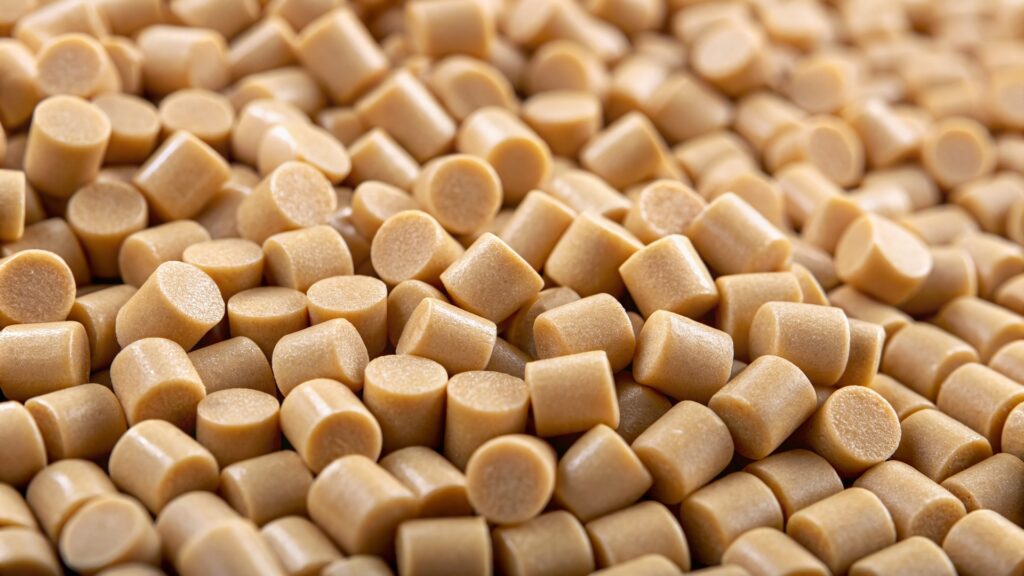
Food Packaging, Foodservice Products (cutlery, cups, lids), Retail & Carrier Bags, Films, for products requiring certified compostability and a regenerative end-of-life.
Ideal Applications
Bio-Based Masterbatches, Co-Developed
For Plastic Decarbonization
Reduce your carbon footprint and material costs without disrupting your existing production. Our bio-based masterbatches are customized rather than selected from a catalog. Each one is a concentrated additive carrying biogenic carbon from upcycled biomass, formulated around the polymer you already run and the decarbonization target you have to meet. Compatible with conventional and biosourced polymers, they replace a portion of virgin resin content, reducing the amount of fossil-based plastic required.
The level of reduction depends on the base polymer, the biomass loading and the formulation. A product carbon footprint can be established per ISO 14067 for your application, and third-party verification can be included in the development scope.
- Formulated for your polymer and your technical and decarbonization targets, not chosen from a catalog
- Product carbon footprint assessed per ISO 14067, scoped per project
- No new tooling (runs on your existing line)
- Cost efficiency (replaces part of the virgin polymer)
- Mechanical performance validated against your specification on trial material before a grade is fixed
- Optional food-contact compliant grades available.
Key Features & Benefits
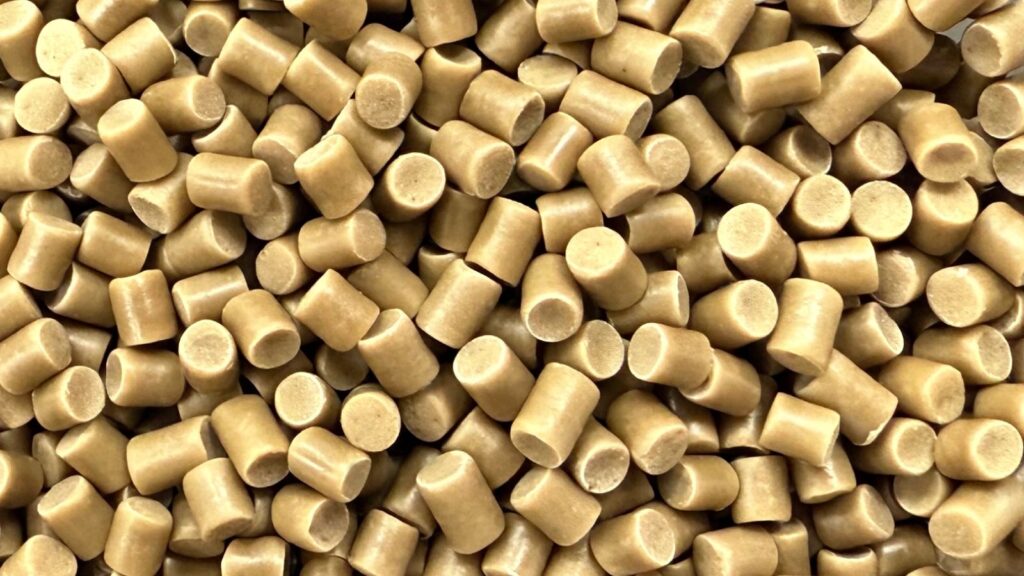
Packaging, Consumer Goods, Automotive Components, Construction, anywhere you seek to decarbonize existing polymer applications.
Ideal Applications
Compare the Ranges
Our Materials at a Glance
| Home compostable compound | Industrial compostable compound | Bio-based masterbatch | |
|---|---|---|---|
| Compostability | Home and industrial OK compost HOME, OK compost INDUSTRIAL, ASTM D6400 | Industrial EN 13432 | Set by the host polymer |
| Processes | Injection, extrusion | Injection, extrusion | Injection, extrusion and others |
| Biomass loading | Approx. 33% | On request | Set by let-down ratio |
| Best when | The product leaves the user’s control after use and home composting is the intended end-of-life route. | The part stays inside a controlled collection loop | You need lower fossil content without changing the polymer you run |
Compostability certification is held on the material in resin and granulate form. If you are not sure which class your application needs, read home compostable vs industrial compostable.
Custom Formulation & Consulting
Precision Materials for Specific Demands
Most projects do not start from a catalog grade. They start from a target: a polymer you already run, a process window you cannot move, a decarbonization figure you have committed to, or a disposal route your market requires. We develop formulations combining functionalized biomass fibers at controlled particle size, minerals and selected polymer matrices to meet that target.
We understand that attributes like compostability and reusability are not mutually exclusive; the optimal balance depends on your application, priorities (durability vs. biodegradation speed), and regulatory landscape. Our role is to engineer this balance.
- Needs Assessment & Feasibility Review
- Custom Compounding & Prototype Batches
- Processability & Performance Testing
- Scale-Up & Integration Support
- Documentation and Test Evidence Handover
How We Co-Create
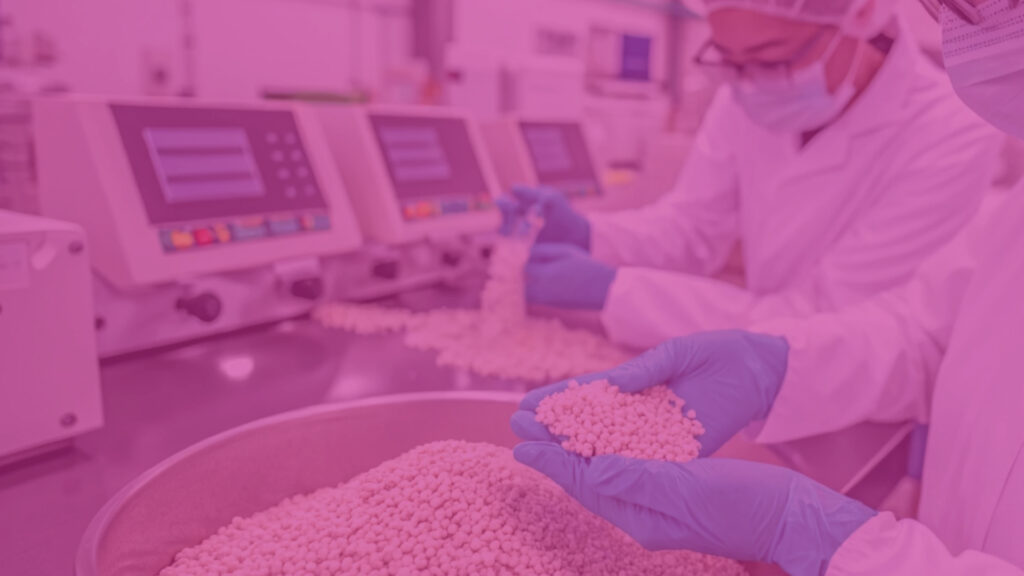
Biomass type/source, Polymer matrix (or plastic-free structure), Compostability/durability profile, Carbon footprint reduction objectives (including low-carbon and decarbonization targets where applicable), Reusability features, Regulatory compliance.
What You Can Customize
Novel applications, demanding performance specs, unique regulatory needs, achieving distinct sustainable material advantages.
Ideal For
Common Questions
Choosing a Biomera Material, Answered
What is the difference between a compound and a masterbatch?
A compound is finished pellets containing the biomass, the polymer and the additives, so you change material and keep your process. A masterbatch is a concentrate you add to your own resin at a set ratio, so you keep your existing polymer supply and change only what goes into the hopper alongside it.
Which one should I choose for a part already in production?
Usually a masterbatch. It leaves your polymer supply and supplier qualification in place, so the change is contained. A compound is the better route when the part is being reformulated or redesigned anyway.
Is the material certified compostable?
Yes. The home compostable range is certified under the OK compost HOME scheme, industrially compostable under OK compost INDUSTRIAL, and certified to ASTM D6400. The industrial compostable range is certified to EN 13432. Certificates are available on request and shared under NDA.
Do I need to change tooling or machine settings?
Tooling normally stays. Process settings usually move, because biomass filled materials shear and cool differently from unfilled resin. Drying and temperature guidance is supplied with every grade.
Can Biomera match a specification I already have?
That is the normal starting point. Send the property set you have to hold and the process you run on, and the formulation is developed against it and validated on trial material before a grade is fixed.