GreenHub
Replacing Traditional Plastics: Technical Selection Framework for Manufacturers (2026)
For manufacturers targeting decarbonisation or regulatory compliance, “replacing plastic” means something specific: reducing or eliminating reliance on fossil-derived, petroleum-based polymers. Not adding a bio-label to an existing product line, adopting materials that can be validated in your process.
In 2026, four technical pathways exist for replacing conventional plastic in industrial production. Each carries a defined processing constraint, a performance delta, and a specific claim standard. Choosing without mapping these parameters to your line costs development time and creates compliance exposure.
This framework helps R&D teams, packaging buyers and production engineers select the right plastic replacement material, and understand what is required to qualify it.
What Does “Replacing Conventional Plastic” Mean for a Manufacturer in 2026?
Full substitution and progressive reduction are both legitimate pathways, but they differ in timeline, capital requirement and qualification complexity.
Full substitution removes a fossil-derived polymer entirely, replacing it with a bio-based or biomass-composite equivalent. Progressive reduction via masterbatch lowers fossil-polymer content share per production run without changing the base polymer identity. The right choice depends on your application, regulatory exposure and available development runway.
The regulatory context sharpens the decision. PPWR (Regulation EU 2025/40), Article 6, mandates minimum recycled content for all plastic packaging on the EU market from 2030, with differentiated targets by packaging category. Article 7 requires recyclability by design, assessed against harmonised EU criteria. The EU SUPD (Directive 2019/904), Article 4, requires demonstrable reduction measures for specific single-use plastic product categories, a requirement that biocomposite and bio-based alternatives can satisfy where end-of-life pathways are documented. PFAS restrictions under REACH are narrowing fluorinated coating and additive options, creating specific substitution urgency in food contact and barrier packaging applications.
In all three frameworks, the common requirement is documentation. Verified claim chains, tied to specific standards and material-level LCA data, are what procurement teams, auditors and regulators require.
See also:
3 Ways to Reduce the Carbon Footprint of Your Plastic Packaging
What Are the Main Categories of Plastic Replacement Materials?
What Are Their Processing Constraints?
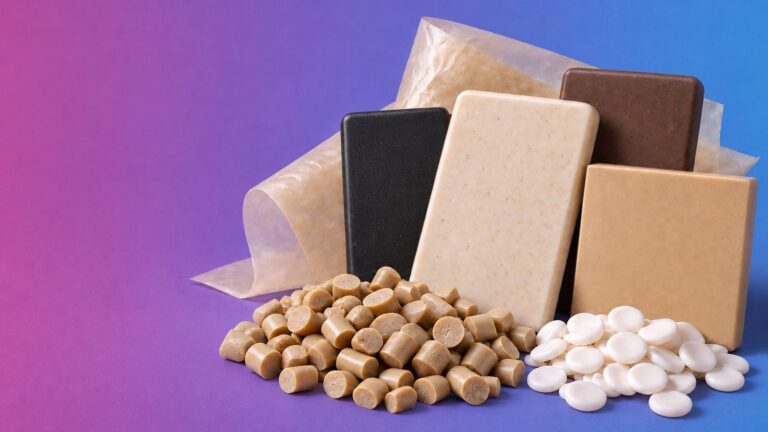
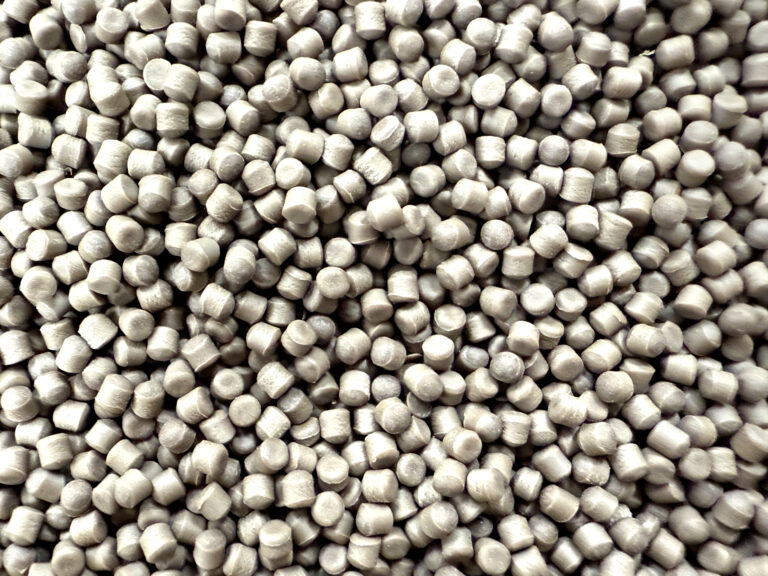
• Biocomposite granules
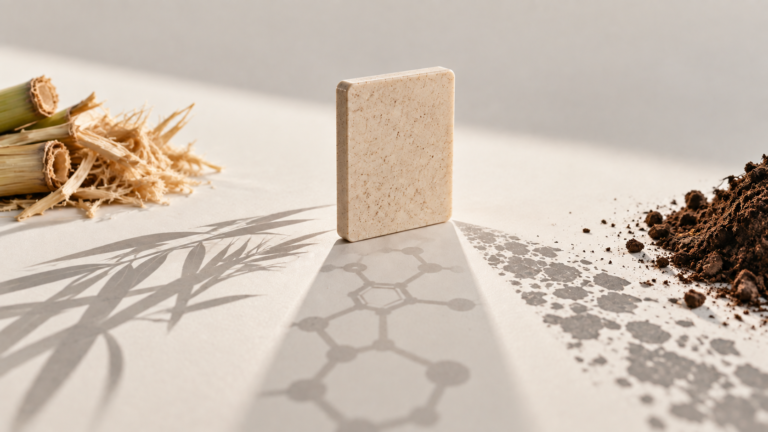
Biocomposites combine a polymer matrix with plant-derived fillers, upcycled agricultural waste including bagasse, rice husk, coffee ground, algae , The binding processing constraint is thermal: natural fibre degradation onset occurs above 200, 220°C depending on feedstock, which sets the practical upper limit for barrel temperature on injection moulding and extrusion lines. This is fully compatible with PP-matrix systems (standard processing range 200, 250°C with adjusted dwell time and screw speed), but requires careful thermal profile management for PA or ABS based applications with higher processing temperatures.
• Biomass-based masterbatches
Masterbatch addition introduces concentrated biomass content into an existing base polymer at 5, 30% loading ratios. At these concentrations, melt flow index delta is typically within standard line tolerance, and cycle time impact is minimal in well-engineered formulations. The base polymer governs the processing temperature; the masterbatch must be thermally stable within that window. For recycled PE or PP base polymers, the most common application, this positions biomass carriers within a 180, 220°C processing range. Visual surface quality and mechanical integrity are preserved at optimised loading; above the formulation threshold, surface defects and strength loss become process risks.
Low-ratio masterbatch systems (5, 15% loading) represent the lowest-risk entry point for manufacturers introducing conventional plastic reduction without process modification.
• Bio-based polymers (PLA, PHA, bio-PE, bio-PA)
PLA processes between 170°C and 210°C and carries a glass transition temperature (Tg) of approximately 55°C, a hard thermal limit for any application requiring heat resistance above 50, 60°C service temperature. PHA grades offer better thermal performance but process within a narrow 140°C, 180°C window (grade-dependent), roughly 40, 70°C below standard PP, and are sensitive to residence time: degradation accelerates with dwell times above approximately 5, 8 minutes at processing temperature. Bio-PE and bio-PA are functionally equivalent to their fossil-derived counterparts in processing behaviour and carry the bio-based origin claim at higher cost per kilogram. These materials are not universal drop-in replacements for conventional plastics in thermally demanding applications.
• Recycled-content systems with carbon-reduction additives
Post-consumer or post-industrial recycled PP, PE or PET, combined with biomass-based masterbatches, enables dual claim substantiation: recycled content (verified under ISO 14021 or third-party certified under GRS/RCS) and measurable carbon footprint reduction versus virgin fossil-based equivalents. Compared with a virgin PP baseline, these formulations can support a meaningful decarbonization pathway by combining recycled polymer content, biomass-based masterbatch, and lower-impact processing choices. The overall low-carbon performance depends on the recycled content level, masterbatch loading, material sourcing, and the carbon intensity of the regional electricity grid. In optimized configurations, the approach can help reduce reliance on virgin fossil-based polymers while improving the overall environmental profile of the final material.
See also:
Biocomposite vs Masterbatch: A Guide to Carbon-Negative Materials
What Environmental Claims Can You Substantiate and Which Standard Applies?
Mismatched claims are the primary compliance risk in plastic replacement material selection. The standard reference is not optional, it is what separates a defensible claim from a Green Claims Directive liability.
• Bio-Based Content: Must be verified via empirical radiocarbon analysis under ASTM D6866 Method B or ISO 16620-2 protocols. This tracks the biogenic origin of the carbon atoms within the polymer chain; it makes no statement regarding compostability, biodegradability, or lifecycle carbon footprints.
• Recycled Content: Requires formal tracking under ISO 14021 (Type II self-declarations) or rigorous third-party audited chain-of-custody certification under GRS (Global Recycled Standard) or RCS (Recycled Claim Standard).
• Carbon Footprint Reduction: Demands a comprehensive comparative lifecycle assessment (LCA) executed under ISO 14067 (Product Carbon Footprint) or the EU Product Environmental Footprint (PEF) methodology, measured against a clearly defined virgin fossil resin baseline (e.g., petrochemical PP or PE) using a cradle-to-gate boundary system.
• Industrial Compostability: Requires unconditional EN 13432 (European) or ASTM D6400 (American) certification. EN 13432 requires 90% disintegration under controlled, thermophilic composting conditions at exactly 58°C ± 2°C within a strict 12-week testing cycle. This must be verified on the finished part geometry, as thin-film certificates do not automatically validate thicker, rigid cross-sections.
• Home Compostability: Requires formal compliance certified under the European NF T 51-800 standard or the TÜV Austria OK Compost HOME framework. Unlike industrial processing, home compostability mandates complete biodegradation and physical disintegration at ambient mesophilic temperatures (typically 20°C to 30°C) within a maximum timeline of 12 months. Part wall thickness is the absolute limiting factor; rigid or thick-walled sections rarely break down efficiently under home composting conditions, making physical validation of the final molded component mandatory.
• Food Contact Compliance: Requires traceable certification under EU Regulation No 10/2011 (within the framework of EC No 1935/2004) for European markets, and FDA 21 CFR (Parts 170, 199, specifically polymer regulations) for the United States. Compounds must pass certified testing for Overall Migration Limits (OML) and Specific Migration Limits (SML) using regulated food simulants (e.g., 3% acetic acid, 10% ethanol, and rectified olive oil) under standardized exposure profiles (OM1 to OM7 conditions). Procurement teams must also audit Non-Intentionally Added Substances (NIAS) profiles to guarantee total chemical safety.
• PPWR Alignment: Demands verified compliance with recyclability-by-design and recycled content mandates per Regulation (EU) 2025/40. Verify applicable articles against the official OJ text for your specific packaging category before publishing compliance claims.
Qualification Protocol: The Minimum Technical Validation Package
Mismatched claims are the primary compliance risk in plastic replacement material selection. The standard reference is not optional, it is what separates a defensible claim from a Green Claims Directive liability.
| Validation Gate | Governing Standard / Method | Target Threshold & Critical Metrics | Risk Mitigation Objective |
|---|---|---|---|
|
Processing Trial |
In-line MFI verification & Spiral Flow Testing |
Barrel temperature capped at 190–210°C (for PP biocomposites); MFI variance maintained within ±10% of host resin baseline. |
Prevents lignocellulosic fiber degradation, manages mold shrinkage deltas, and optimizes gate shear. |
|
Mechanical Testing |
|
Quantify absolute tensile strength, flexural modulus, and notched Izod/Charpy impact resistance against legacy petroleum-based part baselines. |
Ensures long-term structural integrity and preserves structural performance margins. |
|
Thermal Performance |
|
Verify Heat Deflection Temperature (HDT) under load and document exact Vicat softening point parameters. |
Defines real-world service temperature boundaries; prevents structural part deformation in the field. |
|
Drying Protocol |
Desiccant Drying & Moisture Balance Analysis |
Moisture content verified at or below ≤ 0.05% (500 ppm) immediately prior to introducing material to the melt zone. |
Eliminates the risk of hydrolytic macromolecular chain cleavage in hygroscopic resins (PHA/PLA/Biocomposites). |
|
Environmental Claim File |
|
Formulation-specific, third-party audited cradle-to-gate Lifecycle Assessment (LCA) data report. |
Guarantees legal defense under the Green Claims Directive; completely eliminates corporate greenwashing liabilities. |
|
Regulatory Compliance |
|
Certified Overall Migration Limits (OML), Specific Migration Limits (SML), and certified laboratory PFAS-free declarations. |
Secures absolute market placement legality across EU packaging categories and strict global food-contact environments. |
How Biomera Structures the Selection and Qualification Process
BIOMERA bypasses standard off-the-shelf catalogs to pioneer a constraint-first material engineering methodology. Armed with an industrial library of over 6,500 validated custom compounding formulations, our engineering team maps alternative material solutions directly to your specific processing machinery, mechanical stress profiles, and precise compliance frameworks.
To maximize production floor flexibility, BIOMERA provides two distinct technical pathways tailored entirely to your operational strategy: whether your facility needs to preserve your legacy host polymer or execute a complete transition to a next-generation material architecture.
Pathway 1: Host Polymer Preservation via Customized Masterbatches
For manufacturers prioritizing processing continuity and minimal line disruption, we develop customized biomass masterbatches tailored precisely to your specific technical needs. This targeted drop-in strategy allows you to retain your original polymer matrix (such as post-industrial recycled or virgin PE/PP) while systematically reducing total fossil-polymer content at 5% to 30% loading ratios. Because each masterbatch is custom-compounded to match your existing Melt Flow Index (MFI) and cycle-time constraints, it drives immediate carbon footprint reductions without requiring tooling changes or capital expenditure. Each reformulation cycle builds a traceably audited, verifiable lifecycle dataset to support defensible lower carbon footprint materials and decarbonization materials claims.
Pathway 2: Complete Overhaul via 100% traditional Plastic-Free Formulationss
Where full replacement of conventional fossil plastics is the ultimate mandate, Biomera engineers advanced biocomposite granules and specifically optimized to decarbonize. Compounded from traceably sourced, upcycled agricultural and industrial biomass, these high-performance granules provide a functional processing better or equivalent to standard filled polymers while maximizing biogenic carbon storage.
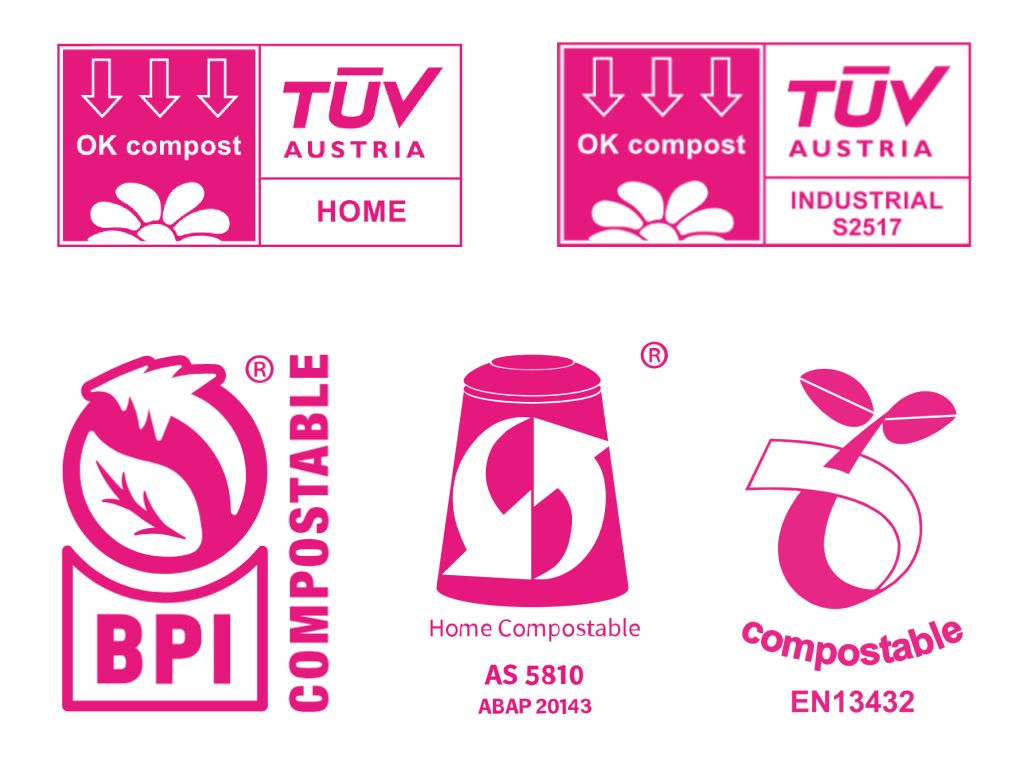
For qualifying formulations where end-of-life degradation is appropriate for the application context, BIOMERA provides fully transparent validation pathways to secure elite global compostability credentials.
This includes TÜV AUSTRIA OK Compost HOME and OK Compost INDUSTRIAL, European EN 13432, Australian ABA Home (AS5810) and Industrial (AS4736), and American BPI compostable certifications.
Every pathway is paired with explicit technical guidance governing part geometries and maximum wall-thickness constraints, ensuring your finished product complies flawlessly with international environmental claims standards.
Practical Checklist: Before You Select a Plastic Replacement Material
- Define the Application: Document exact process type, part wall thickness, gate configurations, and required annual output volumes.
Identify Performance Constraints: Quantify absolute thresholds for tensile modulus, flexural strength, notched impact resistance, HDT, and food-contact boundaries.
Map the Target Claim: Determine the exact environmental claim and its governing standard (e.g., bio-based content via ASTM D6866, carbon reduction via ISO 14067).
Review Regulatory Exposure: Verify your application category under Regulation (EU) 2025/40 (PPWR), check PFAS declarations, and confirm regional single-use restrictions.
Confirm Process Compatibility: Verify barrel temperature profiles match your specific polymer matrix, checking that processing heat does not induce degradation.
Verify Drying Protocol: Ensure hygroscopic materials are subjected to desiccant drying immediately prior to processing to achieve a moisture content below supplier thresholds.
Request Formulation-Specific Data: Secure direct, grade-specific LCA reports or technical simulation data, reject category-level documentation.
Execute Controlled Processing Trials: Run an initial line trial (checking MFI variance, spiral flow, and thermal stability) before full production commitment.
Build the Defensible Claim File: Compile the final compliance dossier containing independent LCA outputs, third-party certificates, chain-of-custody tracking, and finished-geometry test data.
Key Questions & Expert Insights
What processing temperature adjustments are needed when switching from conventional PP to a biocomposite grade?
Biocomposite grades incorporating natural plant fibers must process below the fiber’s thermal degradation ceiling, typically 200, 220°C depending on feedstock type and moisture content. For PP-matrix biocomposites, this means working strictly within a 190, 210°C barrel temperature range, with managed residence times and reduced screw speeds compared to unfilled PP resins. Discoloration or off-gassing at the die exit are immediate indicators of degradation onset. R&D teams should conduct a controlled spiral flow test on representative tooling before committing to full production parameters.
Is a bio-based plastic the same as a plastic replacement material?
Not necessarily. Some bio-based plastics remain very close to conventional plastics in their end-of-life behavior, especially when they are not biodegradable or compostable. At the same time, some chemically modified bio-based materials may still be legally classified as plastics under EU legislation while being specifically engineered and certified for compostability.
The real distinction is therefore not simply whether a material is bio-based, but how it performs across its lifecycle: renewable content, formulation, industrial processability, compostability, and end-of-life impact.
What is the fastest path to a verified carbon reduction claim?
Utilizing a biomass-based masterbatch at a 15% to 25% loading ratio in a certified post-industrial recycled PE or PP base, assessed via a comparative ISO 14067 LCA against a virgin fossil reference, consistently delivers a substantiated GWP100 reduction claim within a standard 4, 8 week development timeline. Process disruption is virtually zero, and this strategy provides a traceably audited dataset usable for immediate corporate Scope 3 emissions reporting under GHG Protocol accounting.
Are all biocomposites compostable?
No, EN 13432 compostability requires 90% disintegration within 12 weeks at exactly 58°C ± 2°C under controlled industrial composting conditions, and this must be certified for the complete finished part geometry. A certificate obtained on a thin film does not automatically transfer to a thicker injection-molded component made from the identical compound, as wall thickness heavily dictates disintegration kinetics. Most industrial biocomposites are engineered for mechanical durability and long-term carbon sequestration rather than degradation. Applying a compostability claim to a non-certified geometry creates immediate legal exposure under PPWR and the Green Claims Directive.
How does PPWR affect material selection for packaging manufacturers in 2026?
Regulation (EU) 2025/40 sets mandatory recycled content minimums and strict recyclability-by-design requirements for plastic packaging placed on the EU market, with targets phasing in aggressively to 2030. Material specification documentation must address both requirements simultaneously. Integrating a biomass masterbatch into a recycled polymer base can address mandated recycled content thresholds while building a robust carbon reduction claim, providing a dual-objective solution in a single compound.
Conclusion
Replacing conventional, fossil-derived plastics in industrial production is a sequenced engineering and compliance process. The pathways are clearly defined, the scientific standards are firmly established, and the regulatory timelines are legally fixed.
What separates a successful material transition from a delayed one is starting from the correct baseline parameters: your specific process windows, your required mechanical performance specifications, and the exact environmental claim your application must defend, before selecting a material, not after.
To identify which next-generation materials are pre-validated for your specific manufacturing lines and application profiles, contact Biomera’s formulation engineering team to initiate a technical material simulation trial.